The Place You Run Away From
When Lebanon fell apart, Maral knew which door to walk through. Four years later, she went back, and found that home is still the people.
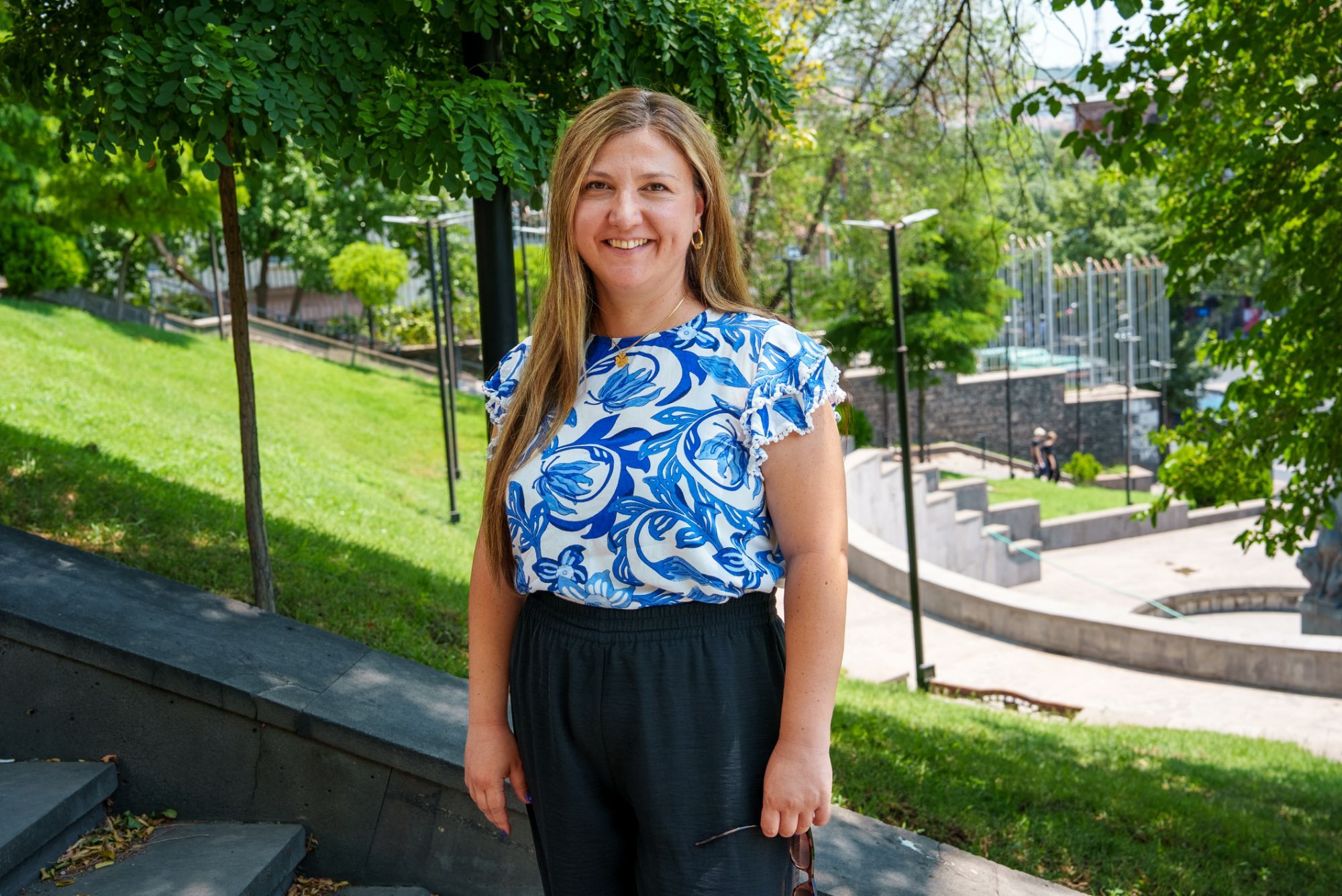
Ask Maral what home is.
She does not hesitate.
“Home for today, it is definitely Armenia.”
Then, almost immediately:
“But on the back of my mind, Lebanon is also always going to be home.”
Two homes.
Neither one disappearing just because the other became real.
For Maral, home has never been a country.
It has been people.
The people who knock on your door without calling first.
The people who sit down for dinner without making plans.
The people who do not need an explanation for who you are.
Home is being able to walk into someone’s house unannounced.
And being received as though you never left.
Maral grew up in Beirut.
She spent her childhood in Mar Mikhael.
Walking the streets she knew by heart.
Studying at an Armenian school.
Growing up between Lebanese and Armenian identities without ever having to explain the distinction.
Lebanon was beautiful.
It was chaotic.
It was hers.
“It was good and bad.”
The good was family, friends, school, childhood.
The bad was everything that slowly made staying harder.
The economic collapse,
COVID,
The port explosion.
The feeling that the country was breaking faster than anyone could fix it.
Maral had a good job and a stable life.
Then, in a matter of months, the value of the life she had built collapsed with it.
A salary that had once given her stability became a fraction of what it had been worth.
And suddenly, stability had become something she could no longer afford to believe in.
She had loved Armenia since she was eight years old.
Came here for summers.
Sat with her grandparents on her mother’s side.
Walked through a city that felt like an open museum:
Sculptures on the streets,
Nature surrounding the capital,
A cleanliness she had not expected.
So when everything fell apart in Lebanon,
She knew which door to walk through.
“You could say it was the only choice.”
She pauses.
Then corrects herself.
“At first I was like, yeah, this is my choice.
After moving, I was convinced it was not technically a choice.
It was running away from something that would, if I had stayed…
Have been much worse.
And it did become much worse.”
The first few months in Yerevan felt like exhaling.
Like setting something heavy down after carrying it so long she had forgotten it was there.
“I was healing from something that had put me in a state of depression.
The hopelessness, the same worries, the same complaining, watching bad news all the time.”
Armenia gave her silence.
The specific luxury of not fearing the worst.
She surprised herself with how easily she adapted.
“I never thought I could be so easy to adapt and be happy somewhere I was not really from.”
Four years passed.
Maral got married, had a daughter, built a routine, built a life.
And then, finally, she went back.
Four years is a long time to wait.
She had missed her neighborhood.
She had missed the apartment she grew up in.
“Just walking those streets…
The streets I had walked a million times,
Going to work, to see my friends, to the local café.
Just walking those streets,
It was the realization that I am home.”
She had expected time to feel paused.
Like pressing play on something she had left mid-sentence.
It did not feel that way…
“When you are an expat and you come back,
You feel like time has stopped.
You do not feel like people actually lived.
As if time has not even passed.”
But it had…
New high-rises where she remembered open sky.
Streets darker than she had left them.
No streetlights in neighborhoods that used to glow.
The pavements so narrow that she could not walk with her daughter in the stroller.
The generators humming outside every building.
The motorcycles, the horns, the noise.
Sounds she had grown up inside of.
Sounds she had completely forgotten.
Something moved through her:
It was not grief.
Not relief…
Something harder to name.
Maral Yeramian“I felt bad that I had left.
But I also felt relieved that I had left.
This is my home.
But it is no longer my home…
I cannot live here again.”
Quieter, almost to herself:
“I would envy the people who stayed.
But it was not really our choice…”
She stayed four months in Lebanon.
Worked from her childhood home.
Ate food that tasted like home.
Let her daughter meet everybody who had only ever seen her in photographs.
Knocked on her aunt’s door unannounced and was received like she never left.
Went to the café she had missed.
Went to the beach she had missed more…
What she had missed most was not the beach itself.
It was the ease of it.
The way nobody needed a plan.
The way you could just show up at someone’s house,
At someone’s table,
And be received as you belonged there.
Because you did.
Maral Yeramian“Home has never been about a country or a place or a building or an apartment.
It has always been about the people.”
Coming back to Yerevan was its own kind of complicated.
“It felt like leaving what you love and coming back to what you built.”
Leaving home…
To go home.
When she unlocked her apartment door, it was relief.
Not the relief of escape,
But the relief of return.
The particular comfort of a space you have cared for and that has,
In the way of things you care for, become yours.
Maral thinks about this sometimes…
About attachment,
About what makes something home.
“You grow attached to the things you care for.
Like tomatoes you grow yourself.
You can eat both kinds: the ones you grew and the ones you bought.
But they do not taste the same.
They cannot.
The ones you grew have your attention in them.
Your worry, your time, your effort…
And home works the same way.”
Maral speaks both Armenian dialects: Eastern and Western.
She can easily shift between them:
She can become slightly more direct here.
Slightly more Lebanese there.
Even her Arabic has changed.
She speaks it more slowly now.
Mixes languages.
Searches for words that used to come naturally.
It is a small kind of loss.
Not dramatic enough to mourn…
But noticeable.
And still, she says her Lebanese identity will never fade,
Because some things live deeper than language.
Her daughter mixes Arabic, English, French, and Armenian.
Maral hopes she can pass the traditions down.
The ways of interacting.
The little pieces that make up a culture before you even realize you are carrying it.
Because maybe this is what happens when you leave.
You stop inheriting home passively,
You start having to choose what survives.
What gets cooked.
What gets spoken.
What gets remembered.
What gets carried into the next generation.
If Lebanon were a person, Maral would not know whether to hug it or yell at it.
She loves it.
She is angry with it.
She wishes it had protected the people who built their lives there.
She wishes it had been safer, more stable, different…
She knows its beauty, its failures.
She knows why she left.
And she knows why she keeps wanting to go back.
A love-and-hate relationship, you might say.
Maybe that is why the word homesickness feels too simple.
Because how do you miss a place that you know you cannot fully return to?
How do you mourn somewhere while still loving it?
How do you call Armenia home without making Lebanon less home?
Maral does not choose.
She does not have to.
For now, Armenia is home.
Lebanon is home too.
One is the place she built.
The other is the place that built her.
And perhaps the hardest thing about leaving is realizing that you can build a beautiful life somewhere else without becoming less connected to the life that made you.
She says going back gave her some closure.
But it also gave her hope.
Hope that maybe one day she can have both.
An apartment in Lebanon.
A few months there every summer.
Her daughter knowing the streets her mother grew up on.
A life where going home does not have to mean leaving the home she built.
Because one day, Maral’s daughter will be old enough to ask her,
“Where are you from?”
And Maral will have to explain something that took her years to understand herself.
That she is from a place she could not stay.
That she built a life somewhere else without ever stopping belonging to where she began.
She will tell her daughter about Beirut.
About the streets she walked a million times.
The houses where nobody needed an invitation.
The food that smelled like generations.
And her daughter will walk those same streets beside her.
As proof that leaving did not mean forgetting.
That a home can be lost as a place and still survive as a story.
That sometimes, the people who leave are not the ones who stop belonging.
They are the ones who spend the rest of their lives making sure the people who come after them know where they came from.
And maybe that is the closest thing to going home Maral will ever need.